Assessing Population Dynamics, Habitat Use, and Threats to the Endangered Grey Parrot near Lac Ndjale, Democratic Republic of the Congo
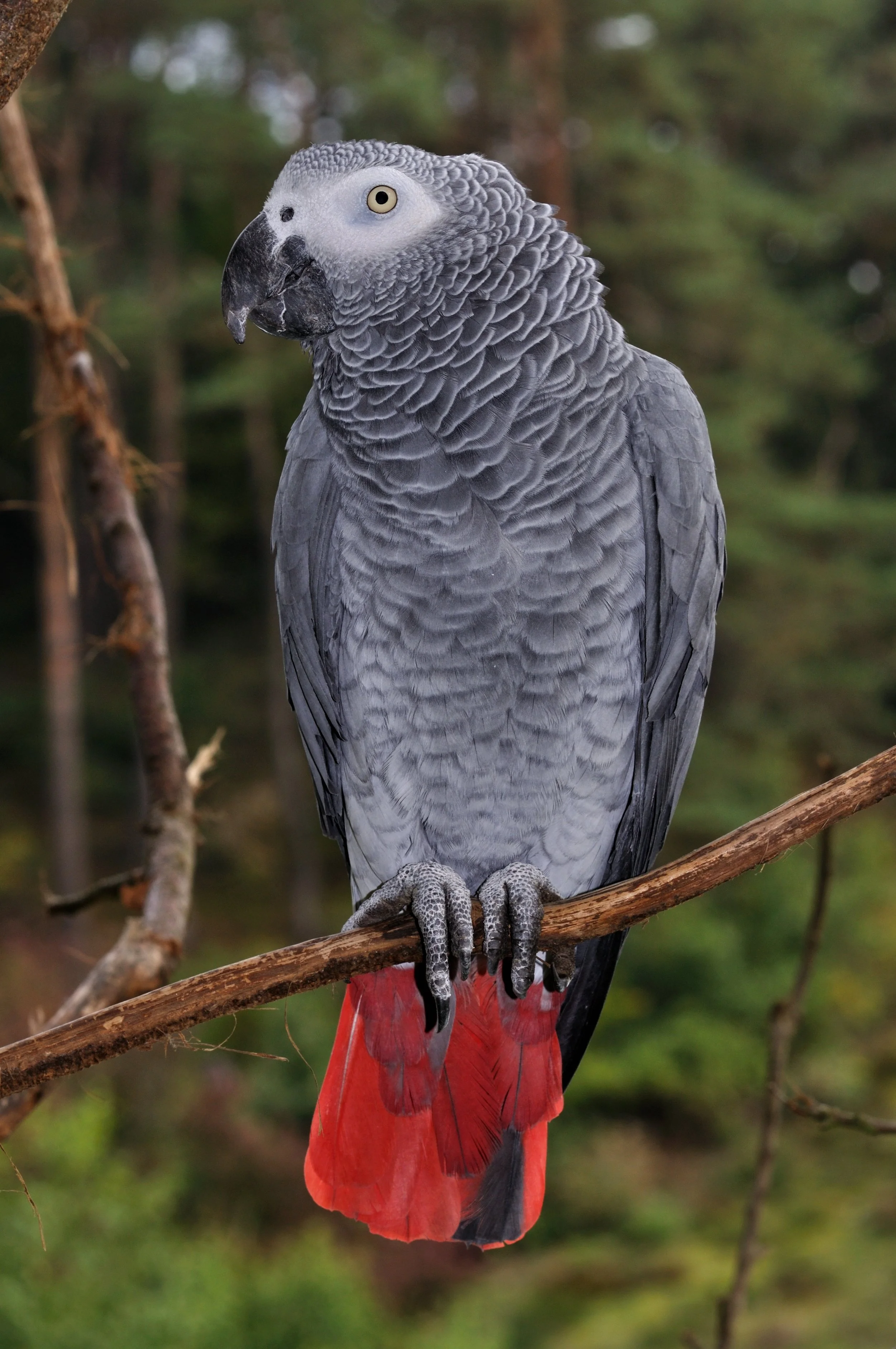
Quartl, CC BY-SA 3.0 via Wikimedia Commons
The Bird Conservation Fund (BCF) is teaming up with the African Bird Club (ABC) to raise $4,067 to for a project that focuses on a population of Grey Parrots (Psittacus erithacus) at Lac Ndjale in the Democratic Republic of Congo (DRC)—one of the most densely populated breeding sites recently documented for this globally endangered species. Although populations have declined sharply across Central Africa in the past few decades, little is known about the species’ breeding ecology or the scale of threats facing wild colonies, particularly in the DRC. This project, led by Sydney-Marie Jones of the University of University of Saskatchewan and the Lukuru Foundation, DRC aims to assess population dynamics and habitat use at a colony first reported to the scientific community in 2015, while collaborating with local communities to evaluate the impacts of illegal capture, habitat degradation, and wildfire.
The study has three main objectives: (1) to estimate population size, space use, and habitat associations of the Lac Ndjale breeding population, and determine how these associations vary between wet and dry seasons; (2) to establish local infrastructure and partnerships for long-term colony monitoring; and (3) to document other bird species in this largely undescribed region. Fieldwork will combine standardized population surveys, nest monitoring, habitat mapping, and engagement with local community members to support data collection and build capacity in ecological monitoring.
The project will be conducted in collaboration with the Lukuru Foundation, whose long-term presence in Maniema Province provides essential logistical support and community engagement. By integrating ecological monitoring with local stewardship, this study will generate the first comprehensive baseline data for this population—strengthening protection of the Lac Ndjale breeding site and advancing understanding of the Grey Parrot’s natural history across its range.
The proposed project focuses on the Grey Parrot, listed as Endangered on the IUCN Red List since 2016. Grey Parrot populations have declined by an estimated 50-79% over recent decades, due to a combination of pressure from the illegal pet trade and habitat degradation. The DRC is a global stronghold for this vulnerable species, supporting the largest wild populations of Grey Parrot and roughly 50% of the species’ range. The DRC is also the largest exporter of wild-caught individuals, with inconsistent enforcement of trapping bans throughout the country threatening sustainability of already precarious populations.
Despite global recognition of their vulnerability, Grey Parrots in the DRC remain poorly studied. Their cryptic behaviour, wide-ranging movements, low densities, and the logistical challenges of remote fieldwork have limited ecological research. Few studies have investigated populations outside Cameroon and West Africa, and those conducted in central Africa have focused predominantly on exploitation and daily behavioural patterns. There are virtually no published studies investigating population dynamics and habitat use of Grey Parrots in eastern DRC.
Consequently, key populations—including those at Lac Ndjale—lack the baseline data necessary for effective conservation planning.
This project will address these critical knowledge gaps by conducting the first formal ecological assessment of Grey Parrots at Lac Ndjale, located in Maniema Province, approximately 70 km southwest of Kindu in central DRC. This unprotected but biologically rich region lies within a Congo Basin transition zone characterized by lowland rainforest, savanna patches, and riverine floodplains.
Residents report that the wooded areas surrounding the lake support a large, seasonally concentrated breeding population of Grey Parrots—described as “astounding” and “deafening” during the nesting period. Despite local knowledge, the Grey Parrot breeding colony was unknown to the scientific community until a 2015 expedition by the Lukuru Foundation, and no systematic surveys have been conducted to assess population abundance and habitat use since.
Fieldwork at Lac Ndjalé will therefore provide an understanding of population size, seasonal site use, and habitat associations—information that is urgently needed for conservation planning. The study will also document local threats, such as trapping, habitat degradation, and deforestation, which are suspected drivers of regional declines. These data will directly support the development of targeted management actions, including habitat protection and threat mitigation. Results will be shared with regional conservation authorities and may contribute to the site’s recognition as an Important Bird Area (IBA) or the establishment of community-managed conservation zones. Findings will also align with national biodiversity action plans and regional conservation strategies for the Congo Basin.
Beyond generating ecological data, the project emphasizes reciprocal knowledge exchange with the Yenge community surrounding Lac Ndjale. Residents, informants, and conservation partners will be trained in field survey techniques, experimental design, data collection and analysis, while their extensive knowledge of the landscape, parrot behaviour, and local threats will directly guide our research. This collaborative approach builds local expertise in avian monitoring, promotes awareness of the species’ ecological importance, and supports the establishment of long-term monitoring protocols, fostering sustained, locally led conservation. Results will be shared with ABC, the Congolese Institute for Nature Conservation (ICCN), and other stakeholders to inform evidence-based management at both provincial and national levels.
Ultimately, this work represents a small step toward long-term parrot conservation in the DRC. While broader management of Grey Parrot populations will require sustained international cooperation, the proposed study will provide the essential foundation: reliable population data, a clearer understanding of local threats, and a trained network of community partners. By addressing a major information gap in a region of global ecological importance, this project will directly advance the African Bird Club’s mission to conserve Africa’s birds and their habitats through research, education, and capacity development.